


Crane & Derrick Compliance
New OSHA standard becomes effective November 8, 2010
OSHA’s new Crane and Derrick standard has a little something for everyone, including some unexpected compliance issues for the electric utility industry. Known as Subpart CC, the standard was years in development, pushed heavily to completion in the last years by serious and highly publicized crane accidents.
For a standard this complicated, OSHA usually publishes compliance directives known as CPLs, for Compliance Safety and Health Officers (CHSO). CPLs are procedural and enforcement guides that the industry can use a tool toward compliance. That document is not immediately forthcoming and there are several compliance issues due shortly. If you have not already done so, download the new standard from www.osha.gov. Get the official Federal Register version dated August 9, 2010. For each issue discussed below we have referenced the Federal Register page number so you can see the citation in its whole context.
The space we have here does not allow addressing all of the particulars of subpart CC but will give the reader a glimpse of how the new standard will affect us in the coming months.
Certification of Operators 1926.1427 (P.48017)
The issue most often brought up is the requirement for certification of crane operators. The standard clearly differentiates between training and certification. All workers must be trained sufficiently to keep them safe no matter what task they perform. Training of employees has always been the employer’s responsibility. Under Subpart CC, crane operators must not only be “trained,” but a third party must certify them as operators. The only exception, where local or state government does not require licensing (p.48015), is for operators of derricks (1926.1436), sideboom cranes (1926.1440), or equipment with a maximum manufacturer-rated hoisting/lifting capacity of 2,000 pounds or less (1926.1441). By the way, when the standard says “derricks,” it is not referring to utility “digger derricks.”
This certification can take one of two forms. Either the employer can send operators to a third party trainer for certification (p.48017), or the employer can provide the training (p.48020) and a third party can certify the employer-trained operators. Third party trainers or auditors must meet certain qualifications established under Subpart CC and cannot be employees of the employer seeking certification for their operators. The standards for certification of operators are found in 1926.1427(j) (p.48157) and appendix C (p.48176).
A significant issue here is what might be considered OSHA’s incorrect assessment of the cost of training to the utility industry. The impact assessment was based on the utility industry (not including contractor personnel) and assumed that only 1 of 4 crewmembers would be operating a crane or digger derrick (preamble p.48084). In the end, OSHA determined that only 30,000 of 114,500 line workers would need to be third party certified.
Phase-in Period 1926.1427(K)
The requirement for certification of operators becomes effective in 2014. The four-year delay was allowed by OSHA for the training industry to ramp up operations sufficient to deliver training. Operators in the meantime are still required to be trained, but not necessarily certified to the requirements of the standard. What is not clear in the text of the rules is made clear in the preamble (p.48027 and 48033 bottom of column 1). OSHA’s intent is that all current operators be determined to be competent by their employers and the training criteria of Subpart CC found in 1926.1927(j) is the basis for that competency.
Exception for Digger Derricks (Preamble P.47924 and P.48136)
The most talked about part of Subpart CC is the scope of the document 1926.1400. Subpart CC covers all cranes including electric utility use of digger derricks with two exceptions. The first exception is when cranes or digger derricks are used in operations or maintenance. The second is when digger derricks are used for auguring holes, setting poles or hoisting pole-mounted equipment.
There is no exception or language related to weight or dimension of the poles or pole-mounted equipment. Under the rule a pole mounted recloser could be hung on a pole by a digger derrick and it would be covered under 1926 subpart V Power Transmission or 1910.269. If the same recloser was set in a substation, the lift and the equipment would be under the rules of Subpart CC (Preamble p.47925). The digger derrick exclusion for utility poles does not apply to digger derricks used to set poles used solely for street lighting. OSHA has specifically included poles used only for street lighting under the standard.
Cranes with Pin-on Baskets (P.47926)
Cranes with pin-on baskets are specifically addressed in the preamble and are not considered aerial lifts that are exempt from Subpart CC.
Material Delivery Exclusion (1926.1400(C)(17), (P.47927)
This separate section on material delivery is intended to recognize the limited risks created by local deliveries to construction sites and generally refers to operations such as knuckle boom material handler trucks delivering drywall and the like.
The issue of whether dropping poles at a pole setting location falls under Subpart CC is not easy to answer based on the rules and the content of the preamble. The issue will likely need some interpretation by OSHA.
OSHA uses the language “arranging the materials in a particular sequence for hoisting” to establish the definition of construction versus material delivery. Placing poles on the ground at the pole setting location, using a knuckle boom, in preparation for setting is therefore construction activity. Placing poles in a pole pile, using a knuckle boom, at a work location or yard may be defined as material delivery. Readers should beware that the setting of poles with a knuckle boom, though similar in nature to the task examples, is not specifically mentioned in the material delivery exceptions. Knuckle boom cranes limited to 2,000 pounds are not covered under the standard. Material delivery persons using a knuckle boom rated more than 2,000 pounds to drop poles may not be part of the excluded activity of setting or removing poles.
The issue is equally unclear with padmount transformers. A padmount transformer set off (with a knuckle boom rated over 2,000 pounds) for construction may be considered exempt as material delivery unless it is set off on the pad at its final connected location.
Maintenance Versus Construction (P.47923)
The preamble clearly establishes that Subpart CC only applies to equipment used in construction. There is additional discussion regarding a utility’s use of a digger derrick in construction (p.47925). If utilities need to differentiate between Maintenance and Construction for the purposes of applying the Subpart CC standard, they need look no further than CPL 2-1.38 Enforcement of the Electrical Power Generation, Transmission and Distribution Standard. The CPL clearly lays out examples of what OSHA considers maintenance and what is construction.
Specific to this Subpart CC, the preamble briefly refers to digger derricks used in operations and maintenance as opposed to digger derricks covered under Subpart CC.
(Preamble 47923) OSHA is promulgating paragraph (a) as proposed except for a grammatical correction to clarify that the standard applies to only equipment used for construction activities. Employers who use covered equipment for both general industry work and construction work would not be required to comply with Subpart CC when the equipment is used for general industry work and not construction work.
As such, cranes of any size, used in maintenance and operations as opposed to new construction should be exempt from coverage in Subpart CC. Crane operations in construction are covered in subpart V or 1926 and parts of 1910.269. Forthcoming publication of revisions to 1910.269 is expected in February of 2011.
Ground Conditions 1926.1402 (P.48140)
The intent of this rule is to establish criteria for assuring that the earth will sufficiently support a loaded crane. Since no language excepting digger derricks or utilities is found, there are certain obligations that must be met. The rule was meant to apply to construction sites and largely centers on who is most likely to know if there are underground conditions that might destabilize a crane. The rule establishes the responsibilities of “controlling entities” in providing ground condition information to a crane operator.
Where no controlling entity is available, such as where a line crew is lifting in a right of way, the employer must ensure the ability of the ground to support the crane load. The ground considerations include slope, compaction and firmness.
The preamble discussion (p.47932) regarding Ground Conditions specifically includes digger derrick operations within the Ground Conditions standard even though digger derricks are considered exempt from the Final Rule. The inclusion of digger derricks may be assumed to apply to digger derricks operating under the Final Rule, such as when setting equipment in a substation, but the discussion does not address the exemption.
Preamble p. 47932 paragraph A definitions discusses the conclusions regarding establishing good ground conditions and specifically rejects the need for any specifications including compaction tests as a means to establish good ground conditions.
Operating Near Power Lines 1926.1407-1408 (P.48142)
The standard for utility workers working near power lines is still regulated under 1910.269 or 1926 subpart V when performing work necessarily within the minimum approach distance. That exclusion does not apply when utility crews are doing new construction in an existing substation. When work is not being performed on the poles, structures or power lines the work safety procedures are regulated under Subpart CC. The Final Rule establishes a trigger distance of 20 feet at 350 kv and a trigger distance of 50 feet above 350 kv. The trigger distance requires new rules for safety of workers including a mandate for an electronic approach warning, encroachment alarms, visible barricades or a dedicated spotter (rule 1926.1407(b)(3)) whose sole responsibility is to observe for clearances.
Dedicated Spotters (P.48144)
The power line safety rules in 1926.1410 include the use of a dedicated spotter under some conditions. Other requirements in 1410 have specific exclusions for work under subpart V of 1926 but no such language is present in the requirements for spotters. Where a spotter is used, they must have certain qualifications (preamble p.47948). A dedicated spotter must be a qualified signal person under 1926.1428.
Assembly/Disassembly Director (p.47938)
The final rule in 1926.1414 establishes a new classification of AD or Assembly Director. It’s obvious by a reading of the section that the target of the rule is the assembly of lattice cranes, tower cranes and the like. Rule 1404 applies to all assembly/disassembly of cranes, referring to any assembly that extends the reach of a boom. Any assembly/disassembly of a boom requires an A/D Director. The intent is to ensure a competent/qualified person is on the site that can direct the assembly of crane components properly and safely. OSHA classifies the person installing the jib as a “rigger,” but that person can also be the AD Director.
Training for Persons Exposed to Electrical Contact Through a Crane 1926.1408(G), (P.47958)
This training would be required for any new employee who is not aware of the hazards presented by a crane near power lines. There is no exception provided for utilities. Substantial language for training of crane workers who may be exposed to electrocution hazards around energized lines are specified in rule 1926.1408. Included in the training criteria are hazards of step and touch potentials, insulating procedures, prevention procedures and the limitations of insulating procedures and grounding procedures as well as avoiding contact with equipment that may become energized in a contact.
Power Line Safety (All Voltages)
Equipment Operations Closer Than the Table A Zone 1926.1410 (P.48144)
When work must take place within the minimum approach distances, 1410 establishes mandatory requirements for the safety of the crew. For utilities the rule allows exceptions if the operation falls under 1910.269 or subpart V of part 1926.
Insulating Links (P.48144)
An insulating link/device installed at a point between the end of the load line (or below) and the load. For utility work falling under Subpart V (p.48145) an insulating link is only required if the clearance will be less than the clearances in Table V-1. Similar exceptions are allowed under 1910.269.
1926.1412 Inspections (P.48146)
The standard contains criteria for daily, monthly and annual inspections. Documentation must be maintained for three months for monthly inspections and for 12 months for annual inspections. Since digger derricks used by a utility for other than setting or working poles brings the digger derrick under the crane standard, the inspection frequency and documentation requirements will apply.
Signal Person 1926.1414-1422 (P.48030)
Signal persons must be trained to a criteria established in the Final Rule. The training can be either third party or employer. Employer provided training is not portable. Documentation of signal person training must be available at the work site. In the case of line crews, the signal persons should have the employer’s certification with them.
Uniform standards for signals are established. The appendix includes a table of hand signals. In the past these were recommended. The Final Rule makes these signals mandatory as an industry-wide uniform system of signals. There are provisions for alternate signals that include criteria for using alternate signals and a pre-plan protocol before alternate signals are used.
Training Riggers 1926.1403 (P.47942)
A worker who swings out a jib is recognized by OSHA as a “rigger.” There is no requirement for certification of riggers beyond the requirement that they be competent and qualified to perform the task. The duty of a rigger is assembly and disassembly of cranes and assembly of parts that extend a crane’s reach, such as swing out or pin-on jibs and the associated work. Under the standard this includes reeving of wire rope in multi-sheave blocks, installing pins, headache balls, connectors and the like. The mention of “slings” used by riggers refers to the slings used to move boom sections and appurtenances into place for installation. There is no mention of riggers doing connections below the hook. References to slings, rigging and connecting loads below the hook are reserved for the discussions of operator qualification.
The preamble discusses training and qualification of riggers, but OSHA declined to establish any standard other than “qualified” as the criteria for riggers. The employer is responsible for assuring a rigger is qualified.
Hoisting Personnel (P.48035)
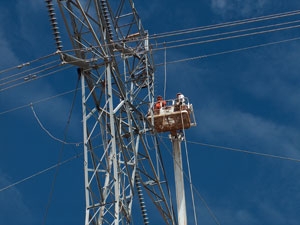
Under 1926.1431 crane-suspended or crane-mounted platforms are intentionally limited in their use. There are also expanded inspection, trial lift and proof test requirements prior to each lift of personnel. OSHA has determined that crane-suspended platforms and crane-mounted platforms are equally hazardous and has not allowed any exceptions to the Trial Lift or Proof Test (p.48039) requirements of the standard. With the exception of working near energized lines, the section allows no exceptions for power line work.
Fall Protection 1926.1423 (P.48154)
1926.1423(c) regarding steps, handholds, ladders, grabrails, guardrails and railings (preamble p.48002) requires that manufacturers’ installed components be maintained in good condition. Walking surfaces must be slip resistant. Units manufactured after November 8, 2011 must have safe access from ground to operator station. Expanded fall arrest requirements are in the Final Rule for lattice boom assembly/disassembly and tower cranes. Currently a worker traversing a crane to get to the operator’s seat is not required to use fall protection. There are no expanded fall arrest requirements in the standard that would affect utility operations.
Mechanics Operating Booms 1926.1429 (P.48031)
Maintenance personnel who are mechanics qualified to work on cranes may operate the equipment for the purposes of maintenance, repair and inspection. If mechanics use a crane in the performance of mechanical work, such as using a crane to lift a boom off of a crane, they would be required, as a minimum, to be qualified as a crane operator to the 1926.1427(j) criteria.
In Conclusion
The standard becomes effective November 8, 2010. Prior to that time utilities and utility contractors must be sure their employees know the new requirements and language of Subpart CC so they can answer the pertinent questions they will be asked by CHSOs who show up on their work sites. Employers must bring their operators up to the operator “competency” requirements of 1926.1427(j) and must certify anyone who signals a crane or digger derrick operator to the signal person standards. Employers must also ensure safety training for all persons who may come into contact with a crane or digger derrick working near power lines and must bring their pin-on crane basket operations into the pre-lift testing requirements of Subpart CC. By 2014 employers must have their third party training or third party auditing of their employer training for operators in place.
Continue to watch iP for information on Subpart CC as we work to be one of your best resources for workplace safety information.