
LOOKING FOR SOMETHING?

47b9371a5ec847a6416d19e09506ac86_XL.jpg

How S.A.F.E.T.Y. Brought Bluebonnet Through the Fires
Written by Emily Wilkins, CSA, CUSP on . Posted in .

47b9371a5ec847a6416d19e09506ac86_XL.jpg

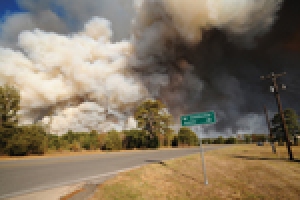
It was Labor Day weekend of 2011, around 2 p.m., when I received a call that there was a fire in my hometown. A big part of Bastrop County, Texas, was burning and thousands of people were being evacuated – friends, co-workers, neighbors and me. Details were scarce, but there were poles and transformers on fire and lines on the ground.

My employer at the time, Bluebonnet Electric Cooperative, believes in working and living its six foundation values: safety, courage, respect, reliability, community and love. Work got under way quickly, responsibly and safely.

Bluebonnet’s emergency action plan, which tells all Bluebonnet employees to shift into emergency response mode, was immediately initiated. During an emergency event, every employee has an important role throughout the restoration and response process.

S: Safety First
After the fires started on Sunday, Sept. 4, 2011, Bluebonnet crews were called in almost immediately to work side by side with firefighters and first responders to ensure the safety of both cooperative members and those who came to fight the fires.

“The Bastrop Complex fires burned 34,068 acres,” said Mike Fisher, emergency management coordinator for Bastrop County. “At the peak of activities, there were in excess of 1,200 responders and utility workers being coordinated safely and effectively.” Bluebonnet’s 279 employees worked more than 224,559 hours over a four-month period during the restoration and response process to return our community to a new normal after the Bastrop Complex fires. This was accomplished with zero incidents.

“Our control center was able to open breakers and fuses remotely to cut power at involved substations,” said Joey Tobola, a Bluebonnet superintendent of operations. “And our crews worked tirelessly to get in front of the fire to cut off power to the one substation that lost communication with the control center to make it safe for the emergency workers and residents. The fire around the Alum Creek substation was intense, but our guys were able to run in and open up the circuit, barely getting out of the gate in time. The fire had surrounded the substation.”

“Bluebonnet crews continued to work alongside the firefighters to ‘make safe’ by opening up feeders, OCRs and fuses,” said Brandon Johnson, crew training supervisor. “In addition, crews were cutting down lines, and removing damaged transformers and burnt poles to keep the roadways open and safe for the firefighters to battle the fires.”

As a Bluebonnet safety compliance coordinator, my job was to make sure our crews, the public and emergency responders were able to safely do their jobs. Throughout the event, I worked among the crews and emergency personnel to help ensure safety for everyone.

I drove through the burn zone to watch over Bluebonnet crews, notifying them of the fires’ direction and checking for downed lines and equipment. In addition, I maintained communication with the firefighters in the field who reported lines or poles blocking entrances and exits that could hinder their ability to work. Smoke and flames were everywhere and nothing was stopping the fires from crossing creeks and roads. The crews needed information at a moment’s notice if the fire was changing course and putting them in danger.

Within a few hours of the start of the fires, Bluebonnet evacuated its headquarters building and control center, relocating to a backup control center. The transition was seamless.

A: Assess the Situation and Create a Strategy to Safely Restore Power
Bluebonnet worked with the Bastrop County Office of Emergency Management and the Southern Area Type I Incident Management Team to assess the situation and create a safe strategy to not only save homes, but restore water, wastewater and power.

“The important thing was to get the community back to normal as quickly as possible,” Tobola said.

During the first 24 hours, our top priorities were to make safe, create detailed maps to identify the burn zone and create a strategy to restore power. Within 48 hours, our geographical information system technology enabled Bluebonnet’s mapping department to create an area map of the burn zone, including both road names and utility systems.

“This map became the Bastrop County Office of Emergency Management’s and Southern Area Type I Incident Management Team’s outline for creating a strategy to accomplish this enormous task,” Fisher said.

“Linemen and line-design technicians paired up to assess the fire damage,” said Richard McCan, Bluebonnet’s crew supervisor. “The line-design technicians were able to recreate the lines, and stake where poles and equipment should be replaced. The line-design technicians drew up jobs, created a materials list and ordered the material so it could be distributed to the contractor crews to rebuild the lines.”

Using the detailed, map and following the model for fighting fires created by the Southern Area Type I Incident Management Team, Bluebonnet split the burn boundary map into three zones in order to divide and conquer the rebuilding and restoration process.

F: Follow All Safety Processes and Procedures
Bluebonnet is committed to the safety of all its employees, members and communities. It supports, encourages and educates employees and members about ways to protect themselves and the environment in which they live.

The safety training that prepared Bluebonnet to respond safely and quickly to such a massive event included:
• An emergency response plan: A restoration plan after an event.
• An emergency action plan and egress: How to be prepared for emergencies and fire protection is a basic principle of workplace safety.
• Work zone safety: Identifies the hazards presented by working on or near roads in work zones, and procedures to set up proper work zones and traffic control.
• Distribution line safety: Describes the purpose of grounding to minimize the danger of induced and static charges and ways in which isolated or de-energized lines can become energized.
• Lockout/tagout: Switching, tagging, testing and protective grounding of the system to reduce the dangers created by faults.
• Heat stress management: Prehydrate, take frequent breaks and use the buddy system to identify when a co-worker is in distress.
• Sixteen-hour rule: Limit the number of hours worked by an employee in a 24-hour period to avoid worker fatigue and critical errors when performing safety-oriented tasks.
• Tailboard meetings: Crews meet at the job site to discuss the details of the job; assign task responsibilities; distribute emergency contact numbers, 911 addresses and emergency procedures; identify hazards; and specify the personal protective equipment to be used.

Bluebonnet put additional safety precautions and communication plans in place to ensure employees’ safety and accountability during the fires and power restoration. Twice-daily meetings with the Bastrop County Office of Emergency Management and the Southern Area Type I Incident Management Team kept everyone up to date on how many people and crews were working in the burn zone. The meetings also allowed Bluebonnet to get firsthand knowledge of the progression of the fire and any heightened hazard areas. Bluebonnet zone leaders then took this information to crews through tailboard sessions at the beginning and end of each workday.

Additional precautions were made because of the imminent danger of still-smoldering and burning trees, houses, debris and stump holes. These precautions included multiple layers of personnel working within each of the districts. Personnel watched over the crews and stayed in constant communication with the numerous contractors, personnel, and emergency responders performing restoration tasks and fighting flare-ups.

E: Execute the Emergency Response Plan
Once Bluebonnet’s control center notified the cooperative’s executive team, it immediately put its emergency response plan into action. Bluebonnet’s emergency plan and disaster training were put to the test. Contractor crews for both overhead construction and right-of-way maintenance were called in to assist with quick rebuilding, debris removal and power restoration.

T: Technology and Communication are Important to Have in Your Tool Belt
Technology played an essential role throughout the event. It allowed Bluebonnet to quickly and seamlessly switch to an alternate control center. Advanced mapping systems guided crews into the burn zones by showing where the lines and poles were located.

“There were no longer homes, addresses or street signs to identify what section of the feeder they were currently working on to restore,” said John Riley, Bluebonnet apprentice lineman.

GPS technology in the trucks made crews’ locations available to the control center at all times. Mobile data software allowed line-design technicians in the field to electronically create a materials list and send an order for the materials to be ready the next day.

Using Internet technology, Bluebonnet posted a map of the burn zone on the cooperative’s website and overlaid it with a color-coded map estimating power restoration to different areas. The map was updated daily and provided the community with specific information and updates on Bluebonnet’s restoration progress. Bluebonnet’s communication department used Facebook and Twitter daily to constantly communicate updates about the fire and power restoration to the community. Keeping the community informed provided a level of comfort that was not available elsewhere.

Y: Yield Safe Results
The last power outage was restored 19 days after crews began working in the burn zone, two weeks earlier than estimated.

Hundreds of members who had lost homes were requesting power restoration, and Bluebonnet assigned dedicated crews to continue working in the burn zone. All cooperative members affected by the fires were their No. 1 priority. To date, more than 700 meters out of 1,600 lost in the fires have been replaced, and members continue to contact Bluebonnet to get reconnected. Cooperative employees have worked more than 252 miles of line and replaced more than 1,000 poles in the burn zone.

Bluebonnet continues to follow its management best practices to protect the environment and the community it serves. It contracted with arborists and biologists to monitor and advise the cooperative on how to conduct the restoration process with the least amount of impact on the environment and wildlife. An estimated 1.5 million trees died or are expected to die. The cooperative has recycled 300,000 cubic yards of trees, yielding 120,000 cubic yards of wood chips for mulch.

Bluebonnet has overcome many challenges and obstacles since the forest fires of 2011’s Labor Day weekend. It has been able to accomplish this by striving to keep its workplaces incident-free and ensuring employees go home safely at the end of each day.

About the Author: Emily Wilkins, CSA, CUSP, owner of EW Safety Consulting, is a former Bluebonnet Electric Cooperative employee with 10 years of experience in the electric utility industry. She is an advisory committee member of the Utility Safety & Ops Leadership Network (USOLN) and secretary of the Texas Roundtable of Utility Safety Teams (TRUST). Wilkins is also the 2012 recipient of the Carolyn Alkire Safety Advocate Award, which is given to those in the utility industry who display a passion for safety.

IP ARTICLE VAULT 2004 - 2015

Human Performance Tools: Important or Critical?

2014 USOLN Safety Award Winners Announced

Arc Flash and the Benefits of Wearing PPE

Closing the Safety Gap

Chainsaw Safety, Planning and Precision Felling Techniques

Train the Trainer 101: Substation Entry Policies

Voice of Experience: How Does the Employer Ensure and Demonstrate?

December 2014 Q&A

December 2014 Management Toolbox

Lessons Learned, Successful Implementation of Behavioral Safety Coaching

The Pain Game: Preventing MSDs

Eliminating Excuses

Training for the New Century

Fall Protection by the Numbers

Injury Free Change

What It Takes to be a Safety and Compliance Leader

Why Single-Point Grounding Works

The Burning Question

Notes From the Underground

Leadership Influencing the Culture

Ergonomics: Preventing Injury

Taking Safety to the Next Level

4 Rules to Live By

Frostbite

A Friend in Need at Indiana Rural Electric Coops

Cleaning Rubber Goods for Safety

Lowering the Threshold

CAVE-IN! Increasing Job Site Safety & Reducing Costs

Keeping the ‘Fighter Pilots’ of Your Company Safe

Safety Comes First at SM Electric

Dramatic Results

Focusing on Safety at Comcast

When is a Lineman a Lineman?

Making Sure Everyone Goes Home Safe at Southern California Edison

Stay Alert! Work Safe!

Everyone Benefits at Charter Communications

Dissecting an OSHA Inspection

Top Five PPE Mistakes

Ultimate Protection

Learning Curve

Total Success at Dominion

NESC-2007 Update

Making Safe Choices

Tips for Improving Incident Investigation Interviews – Part 1: Preparation

The Key to Safety at KCP&L

Digging Out – The Interagency Snow Rescue Task Force

LockOut TagOut

Tips for Improving Incident Investigation Interviews- Part 2: Contact Time

Dreams Can Become Reality: SDG&E Flex Center

Bridging Communication Gaps

Equipotential Grounding at AEP

Training Development

Focusing on a Safety Culture at Consumers Energy

Substations: Eliminating the Dangers Within

Ensuring Safety at Grand Bahama Power

Perfect Storm – The Case for AED’s

Embracing Change: Think Human Performance

NESC 2007 FLAME RESISTANT CLOTHING

Managing Safety Rule Violations

Passion for Safety

How to Bulletproof Your Training

Tower Rescue Pre-planning Pays Off

Managing Safety

Effective Fall Protection for Utility Workers

Safety Information Superhighway

Inspection of Wooden Poles

Free Climbing vs. Safer Climbing

Safety Culture Success

Inspecting, Cleaning and Storing Live-Line Tools

Arc Flash – Are You in Compliance?

Human Performance

Training Second Point of Contact

Preventing Underground Damage

Keeping Things Safe in the Field and the Office

Winter Safety Vehicle Checklist

Strategies for Safety in the Wind Industry

What’s in a Number?

How to Choose and Use Ergonomic Hand Tools

Meeting the Challenge

Machine Safety

What You Need to Know About Substations

Moving from Operations into Safety or Training

Distribution Dispatcher or System Operator?

High Visibility and Arc Ratings for Flame Resistance

Stuck in the Mud

Aerial Rescue

Going With the Wind

Incident Analysis

Hidden Traps of Generator Use and Backfeed

Making the Right Choice

Soil Resistivity Testing & Grounding System Design: Part I of II

Succession Syndrome

Making Safety a Core Value

Floodwater Hazards and Precautions

Know the Signs and Symptoms of Heat-Related Illnesses

Huge Steps

Seamless and Compliant

Soil Resistivity Testing & Grounding System Design: Part II of II

Aerial Lifts

How Good Are Your Tailgates?

Root Cause Analysis

Maturity Matters

What Do We Do About Arc Hazard?

NESC-2012-Part 4: Summary of Change Proposals

A FULL Commitment

Arc Suppression Blanket Installation

What Does NFPA 70E Mean To You?

How Safe Are Your Ground Grids?

Introducing a New Certification Program for Utility Safety Professionals

Confused About Arc Flash Compliance?

Analyzing Safety and Hazards on the Job

Error-Free Performance

People Focused Safety

No Substitute

Error-Free Performance: Part II

Heard It Through the Grapevine

Best Practices

Line of Fire

Is Your Company Ready for the Next Disaster?

Preventing Employee Exposure to Pesticides

Compressed Gas Cylinder Safety

LOTO vs. Switching and Tagging

Are You on Cruise Control?

Solid Footing

Hand Protection

Crane & Derrick Compliance

Mind Control: Distractions, Stress and Your Ability to Work Safely

Rubber Insulating Line Hose

Procedure for Reducing Injuries

Huskie Tools Opens New Fiberglass Restoration Division

A92.2: The 2009 Standard

Vehicle Operation Winter Readiness

ATV Safety Begins with Proper Training

Innovate or Follow: The Argument Against A Best Practice

Northeast Utilities Takes Safety Off-Road

High-Pressure Hydraulic Injection Injuries

100 Percent Fall Protection: A Joint Union-Management Effort

Crew Foreman Needed: Who Do We Pick?

Behavior Safety: A Safety Program’s Missing Link

Challenges & Successes

Drop Zone Management: Expanding Our View of Line of Fire

Taking Stock of Your Fall Protection Compliance

Live-Line Tool Use and Care

Employee Training: How Hard Can It Be?

Supervisory Skills for Crew Leaders

Equipment: Back to Basics

A Second Look at Safety Glasses

Competition for a Cause

Human Behavior and Communication Skills for Crew Leaders

Cultivating a Mature Workforce

What’s Your Seat Belt IQ?

Substation Safety

No-Voltage Testing

Five PPE Safety Challenges

Safety Circuitry: The Power in the Brain

Arc Flash Exposure Revisited: NESC 2012 Part 4 Update

T&D Best Practices for Crew Leaders

CUSP Basics: Introduction to Human Performance Principles

Felling of Trees Near Power Lines

Working in Winter

Back to the Basics: PPE 101

Hearing Conservation: An Interesting Challenge

T&D Safety Management for Crew Leaders

Basic Qualifications of Employees

FR Layering Techniques

Safety Rules and Work Practices: Why Don’t They Match Up?

Effective Customer Relationships for Crew Leaders

The Value of Safety Certification

Safety Leadership in a Written Pre-Job Briefing

Communication: The Key to Great Safety

Safe Use of Portable Electric Tools, Cords and Generators

Keys to Effective Fall Protection

Integrity and Respect: Two of Our Most Important Tools

The Intersect: A Practical Guide to Work-Site Hazard Analysis

Strategic Safety Partners

Behavior Safety Training for Safety Committee Members

Combating Overuse and Overexertion Injuries

Safe Digging – Get the 411 on 811

Apprenticeship Training

How S.A.F.E.T.Y. Brought Bluebonnet Through the Fires

Formal vs. On-the-Job Training

That’s What I Meant to Say: Safety Leadership in Communication

The Value of Personal Protective Equipment

Safety and Human Performance: You Can’t Have One Without the Other

Oh, No! Changes in the Workplace

Performance Improvement: Barriers to Events

Train the Trainer 101: Ferroresonance Explained

Voice of Experience: Safety Excellence Equals Operational Excellence

A Mirror: Your Most Important PPE

Care of Portable Ladders

Voice of Experience: FMCSR Compliance: Driver Qualification Files

Train the Trainer 101: Enclosed Space Rescue

Keys to Evaluating and Comparing Arc-Rated and Flame-Resistant Fabrics

Raising the Bar, Lowering the EMR

How Six Sigma Can Improve Your Safety Performance

Detecting Shock Hazards at Transmission Line Work Sites

Care and Maintenance of Climbers

Voice of Experience: Are You Ready for the Big Storm?

Train the Trainer 101: Working from Crane-Mounted Baskets

Learning Leadership: The Leadership Paradigm Shift

Are You Prepared for the Next Generation of Lineworkers?

Implementing a Zero Injury Program

Public Safety and Our First Responders

Managing Cold Stress

Live-Line Work on the Jersey Shore

Soil Classification and Excavation Safety

Voice of Experience: The Definition of Personal Protective Equipment

Learning Leadership: Leadership Skill Set 1: Self-Awareness

Evaluating Crew Supervisors

Train the Trainer 101: Arc Hazard Protection

NESC and ANSI Z535 Safety Sign Standards for Electric Utility Power Plants and Substations

Working Safely with Chain Saws

The Globally Harmonized System for Classifying and Labeling Chemicals

Voice of Experience: The Cost of Business

Train the Trainer 101: Understanding Grounding for the Protection of All Employees

Learning Leadership: Leadership Skill Set 2: Self-Regulation

Occupational Dog Bite Prevention & Safety

Safety Awareness for Substations

Bighorn Sheep vs. Lineworkers: What’s the Difference?

OSHA Job Briefing Basics

Voice of Experience: Training for the Qualified Employee

Train the Trainer 101: ASTM F855 Grounding Equipment Specs Made Simple

Foundation Drilling Safety: The Aldridge Electric Story of Success

The Authority to Stop Work

Starting From the Ground Up

Understanding Step and Touch Potential

Multitasking vs. Switch-Tasking: What’s the Difference?

Voice of Experience: Incidents and the Failure to Control Work

Train the Trainer 101: Live-Line Tool Maintenance Program

Passing the CUSP Exam

Learning Leadership: Leadership Skill Set 4: Social Awareness

Ergonomics for Lineworkers

Are Your Temporary Protective Grounds Really Protecting You?

Voice of Experience: Working On or Near Exposed Energized Parts

Train the Trainer 101: Why You Need More than 1910 and 1926

Transitioning to FR Clothing

Leadership Skill Set 5: Social Persuasion

Safety Management During Change

Spice It Up!

The Singing Lineman

Emergency Action Plans for Remote Locations

Trenching and Excavations: Considerations for the Competent Person

Traffic Safety for Lineworkers

Using Best Practices to Drive Safety Culture

Voice of Experience: The Globally Harmonized System is Here

Train the Trainer 101: Grounding Trucks and Mobile Equipment

The Power of an Effective Field Observation Program

What OSHA’s Proposed Silica Rule Means to You

2013 USOLN Safety Award Winners Announced

Learning Leadership: Personal Protective Emotional Armor: Part 1

Electrical Capacitors in AC Circuits

Improving Safety Through Communication

The Benefits of The CUSP Credential

Voice of Experience: Why Did I Do That?

Train the Trainer 101: Practical Elements for Developing a Safety Culture

Learning Leadership: Personal Protective Emotional Armor: Part 2

Fact-Finding Techniques for Incident Investigations

Electrical Safety for Utility Generation Operations Personnel: A Practical Approach

Addressing Comfort and Contamination in Arc-Rated Clothing

Are You Your Brother’s Keeper?

2013 iP Safety Awards

A Key to Safety Performance Improvement

Salt River Project: Devoted to Safety Excellence

Train the Trainer 101: Safety Incentive Programs

Voice of Experience: OSHA 300 Record-Keeping Rules

Understanding and Influencing the ‘Bulletproof’ Employee

Sustaining Safety Successes

Accident Analysis Using the Multi-Employer Citation Policy

PPE: Much More Than Basic or General Protection

Voice of Experience: Understanding Enclosed and Confined Spaces

Train the Trainer 101: OSHA Forklift Certification Requirements

June 2014 Q&A

Injury Prevention Through Leadership, Employee Engagement and Analytics

NFPA 70E Arc Flash Protection for Nonexempt Industry Workers

The Final Rule

Distributed Generation Safety for Lineworkers

The Perils of Distracted Driving

August 2014 Q&A

Voice of Experience: OSHA Eye and Face Protection Standards

Train the Trainer 101: Fall Protection and the New Rule

Responding to Pole Fires

SRP Rope Access Program Addresses Towers of Power

Elements of an Effective Safety Committee

Mitigating the Risks of Aerial Patrols

Job Briefing for One

Culture Eats Programs for Breakfast

October 2014 Q&A

Voice of Experience: Flame-Resistant Apparel is Now PPE

Train the Trainer 101: Stringing in Energized Environments

The Risks and Rules of Chainsaw Operation

Behavior-Based Safety: What’s the Verdict?

Photovoltaic Solar Safety Management for Utilities

Drones and the Future of Tower Safety

Storytelling as a Management Tool

Safety and Common Sense

Snubbing to Steel Lattice Structures: Lessons Learned

February 2015 Management Toolbox

February 2015 Q&A

Voice of Experience: The Importance of Job Briefings

Train the Trainer 101: Addressing Anchorages

Recent PPE Changes and 2015 Trends

Growing a Human Performance Culture

Measuring, Planning and Cutting Methods for Chainsaw Operators

The Importance of Matching Evidence Marks in Accident Investigations

Safe By a Nose

Overhead Utility Hazards: Look Up and Live

April 2015 Management Toolbox

April 2015 Q&A

Voice of Experience: OSHA Updates to Arc-Rated FR Clothing Requirements

Train the Trainer 101: The OSHA-EEI Subpart V Settlement

The Safety Side Effect: How Good Supervisors Coincidentally Improve Safety

Facing Unique Challenges

The Roller-Coaster Life Cycle of IEEE 1307

The Power of Human Intuition

Thirty Years of Personal Perspective

The Most Important Tool on the Job Site

June 2015 Management Toolbox

June 2015 Q&A

Voice of Experience: Fundamentals of Underground Padmount Transformers

Train the Trainer 101: Back to Basics: ‘Gentlemen, This is a Football’

Arrive Alive

How to Navigate the FR Clothing Marketplace

Making the Switch

Understanding OSHA Electric Power Training Requirements

Distribution Switching Safety

Human Performance and a Rat Trap

August 2015 Management Toolbox

August 2015 Q&A

Voice of Experience: Power Generation Safety and the OSHA Update

Stringing Best Practices: Mesh Grips vs. Preforms

Understanding Safety Culture Through Perception Surveys

RF Safety for Utility Workers

2015 USOLN Safety Award Winners Announced

Train the Trainer 101: Practical Underground Safety: Handling Neutrals and Rescue

Voice of Experience: PPE Regulatory and Consensus Standard Requirements

December 2015 Q&A

December 2015 Management Toolbox

The 911 Dilemma

Spotters: A Critical Element of Site Safety

Coping With Industry Changes

The Safety Coaching Observation Process

Fundamentals of Substation Rescue Plans

Recruiting and Training the Next Generation

Shifting Your Organizational Safety Culture

Investigating Industrial Hygiene at Salt River Project

Train the Trainer 101: Practical MAD and Arc Flash Protection

Voice of Experience: Clearing Up Confusion About 1910.269

October 2015 Q&A

October 2015 Management Toolbox

N95 Filtering Face Pieces: Where Does Your Organization Stand?

Stepping Up Steel Safety Education

Rigging Fundamentals for Utilities

Arc Flash Mitigating Technologies and the OSHA Final Rule

Train the Trainer 101: Practical Personal Protective Grounding

OSHA and the Host-Contractor Relationship